AI KnowledgeBeginnerUpcoming
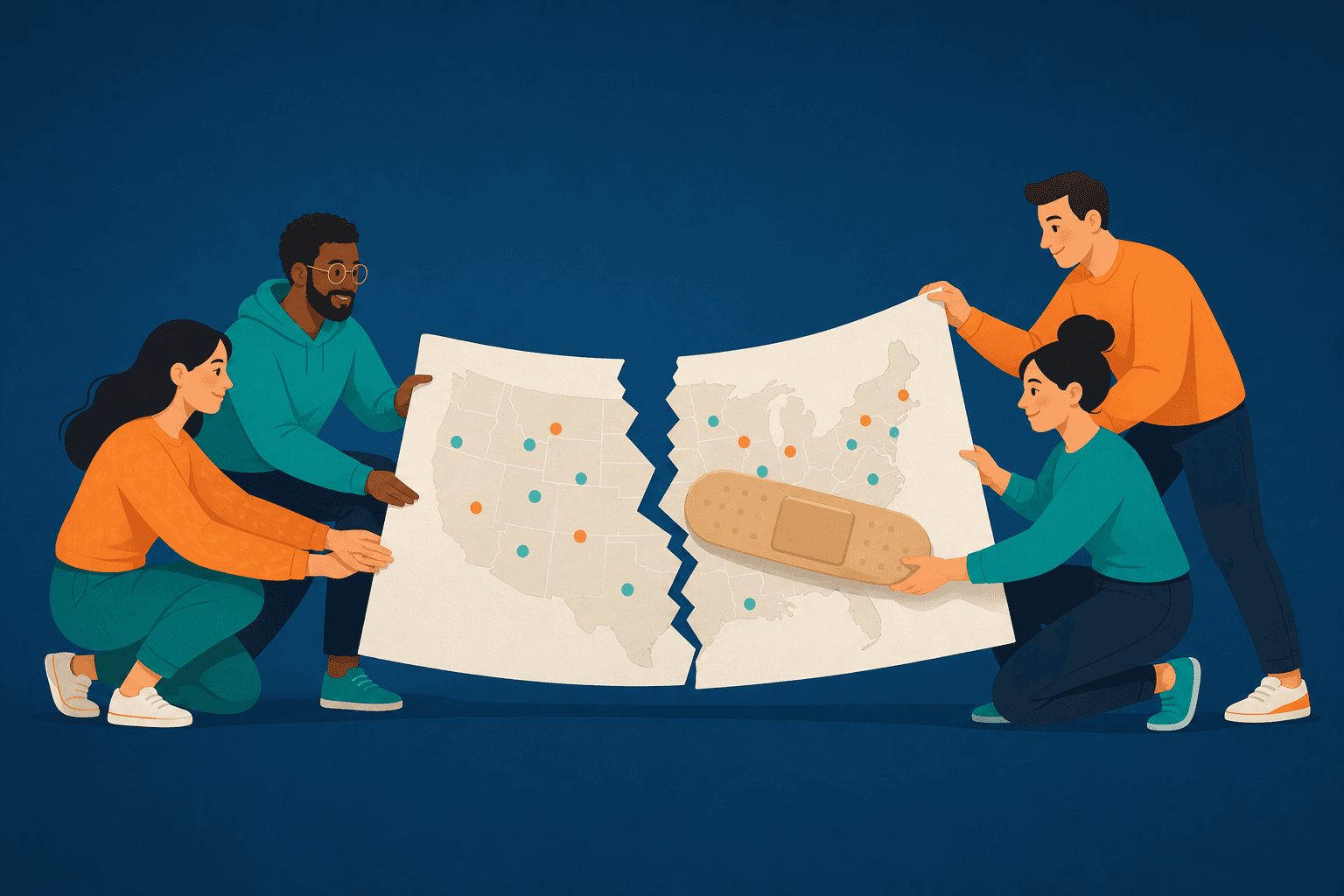
# MINI CHALLENGE: Fix the Broken Map – Rebuilding America's Homeless Resources Data
“Outdated shelter data leaves thousands sleeping rough while beds sit empty. Can you fix the broken information system?”
The Challenge
Every night, people experiencing homelessness call dozens of shelters only to find the phone numbers disconnected, the addresses wrong, or the services no longer available. Meanwhile, empty beds go unfilled because the information connecting people to resources is outdated, fragmented, or plain wrong. This isn't just an inconvenience: it's a crisis of information that costs lives during winter storms and heat waves. The opportunity is clear: multiple datasets exist (government databases, nonprofit directories, knowledge graphs, street outreach records) but they contradict each other, contain errors, and fall out of date within months. New AI and data integration techniques make it possible to cross-reference, validate, and maintain this critical information at scale. The right solution could ensure that when someone needs help, they get accurate information the first time. Your challenge: audit existing homeless resources data from multiple sources, identify errors and outdated information, and propose a system to keep it current. Build a pilot that shows how to validate shelter availability, contact information, eligibility requirements, and service offerings across different databases. Create something that case workers, emergency responders, and people in crisis can trust when every minute counts.
Timeline
Challenge Kickoff & Data Access
KickoffMon, Nov 23, 2026
Opening session introducing the challenge, providing access to homeless resources datasets from multiple sources, and forming teams to begin data auditing.
Validation System Check-in
MilestoneMon, Nov 23, 2026
Milestone review where teams demonstrate their progress on cross-referencing datasets and identifying data quality issues.
Final Submission Deadline
DeadlineMon, Nov 23, 2026
All pilot systems and documentation demonstrating data validation approaches must be submitted for judging.
About This Challenge
## Overview Across the United States, the infrastructure connecting homeless individuals to shelter, food, healthcare, and support services runs on broken information. Phone numbers lead to disconnected lines. Addresses point to closed facilities. Eligibility requirements listed online contradict what intake workers say in person. Service hours are wrong. Capacity numbers are outdated. This information crisis has real consequences. On a freezing January night in Chicago, a person experiencing homelessness might call five shelters listed as having beds available, only to discover all the information is months out of date. In Phoenix during a record heat wave, outreach workers waste hours driving to services that no longer exist at the listed addresses. The data problem literally costs lives. Multiple organizations maintain their own databases: city governments, the HUD Continuum of Care system, 211 information lines, nonprofit directories, and knowledge graphs built by research institutions. Each contains valuable information. Each also contains errors. They contradict each other. No single source is authoritative or current. This challenge asks you to fix the broken map. Take existing homeless resources datasets and knowledge graphs, identify what's wrong, and show how to make the information reliable. ## Background The homeless services ecosystem in America is fragmented by design. Federal funding flows through HUD to local Continuums of Care. State agencies run their own programs. Cities maintain separate systems. Nonprofits operate independently. Faith communities provide services without centralized coordination. This distributed model has strengths, but it creates an information nightmare. Researchers have built knowledge graphs (structured databases of relationships between entities) to map these resources, including the DREAM-KG initiative. These knowledge graphs can represent complex information: which shelters accept families with pets, which require sobriety, which have wheelchair access, which provide transportation to medical appointments. But knowledge graphs are only useful if the underlying data is accurate. The data quality problems fall into clear categories. Contact information changes when organizations move or update phone systems. Services get added or discontinued as funding shifts. Capacity numbers fluctuate daily but databases update monthly. Eligibility rules change but documentation lags. New organizations launch, existing ones close, and nobody updates all the different databases tracking this. Current solutions rely heavily on manual updates: someone calls each shelter monthly to verify information. This doesn't scale. It's expensive, slow, and still leaves data stale most of the time. We need approaches that use automation, cross-referencing between sources, crowdsourcing from service providers and users, and validation techniques that flag suspicious information for human review. ## What We're Looking For Your solution should address the core data quality challenge through one or more of these approaches: Data Audit and Error Detection: Take existing datasets (we can provide sample data or you can use publicly available sources like HUD's Housing Inventory Count, local 211 databases, or published knowledge graphs). Build tools to identify errors, inconsistencies between sources, outdated information, and missing critical fields. Show us what's broken and how you found it. Validation and Verification Systems: Design methods to validate information at scale. This might use automated calling systems to verify phone numbers, geocoding to confirm addresses, web scraping to check if organizations still operate, cross-referencing between multiple data sources to flag conflicts, or natural language processing to detect inconsistencies in service descriptions. Update and Maintenance Workflows: Propose systems to keep information current. Consider crowdsourcing from service providers, integration with existing case management systems, automated monitoring for changes, flagging systems that alert when data appears stale, or quality scoring that indicates confidence levels for different pieces of information. Knowledge Graph Enhancement: If you work with knowledge graph structures, show how to improve data quality within that framework. Build tools to validate relationships, detect logical inconsistencies (like a family shelter that doesn't accept children), merge information from multiple sources while preserving accuracy, or represent uncertainty and data freshness in the graph structure itself. You don't need to solve every problem. Focus on one aspect and do it well. A working prototype that validates phone numbers for 100 shelters is more valuable than a theoretical framework for fixing everything. Provide a demonstration using real or realistic data, documentation explaining your approach and how it could scale, and analysis showing what types of errors you found and how your solution addresses them. ## Expected Outcomes Successful solutions will demonstrate measurable improvements in data quality. Show us the error rate before and after your intervention. Quantify how many outdated records you identified, how many conflicts between sources you resolved, or how much more current your validated dataset is compared to the original. The ideal outcome is a pilot system that could be deployed by organizations managing homeless resources data: local governments updating their service directories, 211 information lines maintaining their databases, research institutions building knowledge graphs, or nonprofit networks coordinating regional information. Your solution should reduce the manual labor required to maintain accurate data, increase the reliability of information available to people seeking services, and provide transparency about data quality (helping users understand which information is verified and current versus uncertain or stale). Ultimately, we're looking for approaches that help ensure when someone experiencing homelessness needs shelter on a dangerous night, the information they find is accurate. That's the measure of success.
Research Team
## Research Team This challenge would support interdisciplinary research teams working at the intersection of data science, social services, and urban informatics. The most relevant work typically emerges from collaborations between computer science departments (specializing in knowledge graphs, data quality, and information systems) and schools of social work or public policy that maintain direct connections with homeless service providers. Ideal research teams combine technical expertise in knowledge graph construction and maintenance with deep understanding of how homeless services operate on the ground. Teams often include data scientists who work on entity resolution and data integration problems, social work researchers who study service delivery systems, and urban geographers mapping social infrastructure. Participants' contributions would directly feed into these teams' core challenge: building and maintaining accurate structured databases of social services. Solutions addressing automated validation, cross-source verification, or crowdsourced updating would provide practical tools these researchers can implement. Methods for detecting stale information or conflicting data across sources would improve the reliability of knowledge graphs these teams are already building. The research typically spans database maintenance challenges that computer scientists understand and real-world constraints that social service researchers navigate daily—like privacy concerns, resource limitations at nonprofit organizations, and the difficulty of engaging frontline service providers in data collection. Successful challenge solutions would bridge this gap, offering approaches that are both technically sound and practically deployable in the fragmented landscape of homeless services.
Resources
# Data Sources for Homeless Resources Data Challenge ## Government Datasets & APIs - HUD's Continuum of Care (CoC) Program Data - HUD Exchange - Point-in-Time (PIT) counts, Housing Inventory Count (HIC) data, CoC geographic boundaries and contact information - HUD's Homeless Management Information System (HMIS) Data Standards - HUD Exchange HMIS - Data structure standards, de-identified aggregate data reports by CoC - HUD's Resource Locator API - HUD.gov Resources - Searchable database of HUD-funded housing counseling agencies and homeless assistance providers - 211 Services Data - Via individual state 211 systems and 211.org - United Way's 211 service maintains local databases; some regions provide data feeds or API access - USA.gov Federal Agency Directory - USA.gov API - Federal facilities and contact information that may include VA homeless services - VA Homeless Programs Database - VA.gov Homeless Veterans - Locations of VA Medical Centers, Grant and Per Diem programs, Healthcare for Homeless Veterans sites - Census Bureau TIGER/Line Shapefiles - Census.gov - Geographic boundaries for mapping services to Census tracts and demographic data - CDC PLACES Database - CDC PLACES - Local health data that can contextualize health service needs by geography ## Nonprofit & Service Directory Data - Aunt Bertha/Findhelp.org Database - Findhelp.org - Large social services directory; may offer data partnerships or API access for research - Open Referral Initiative - OpenReferral.org - Open standard for community resource directories; some cities publish data in this format - iCarol Directory - Used by many 211 systems - Contact local 211 systems about data access; some publish open data portals - Homeless Shelter Directory - HomelessShelterDirectory.org - Crowdsourced shelter listings with contact information and services - National Alliance to End Homelessness Data - EndhHomelessness.org - Research reports, state-level data compilations, policy analysis - Coalition for the Homeless Local Reports - Various local coalitions - City-specific coalitions often publish facility lists and service maps ## Knowledge Graphs & Research Repositories - DREAM-KG (Diabetes Research, Education, and Action for Minorities Knowledge Graph) - Mentioned in challenge description - Look for published papers and GitHub repositories from research teams working on social determinants knowledge graphs - Social Interventions Research & Evaluation Network (SIREN) - SIRENinnovations.org - Social needs screening and community resource data - Wikidata - Wikidata.org - Structured data about organizations, places, and services; SPARQL query endpoint available - Schema.org Nonprofit Organization Markup - Schema.org - Standard for marking up nonprofit data; can scrape websites using this schema ## Geospatial & Location Data - OpenStreetMap (OSM) - OpenStreetMap.org - Community-mapped shelters, social services, food banks tagged with amenity=social_facility - Google Places API - Google Maps Platform - Business listings, hours, phone numbers, user reviews for verification - Yelp Fusion API - Yelp Developers - Business data including shelters, food banks, reviews that can indicate service quality/availability - Microsoft Building Footprints - GitHub - Building locations for address verification ## Phone & Contact Verification - Twilio Lookup API - Twilio.com - Phone number validation, carrier information, line type verification - NumVerify API - NumVerify.com - Phone number validation service for verifying listed contact numbers - Google libphonenumber - GitHub - Open-source library for parsing, formatting, and validating phone numbers ## Weather & Emergency Data - NOAA Weather Data - Weather.gov API - Extreme weather alerts, temperature data to contextualize when accurate shelter data is most critical - FEMA Emergency Shelter Data - FEMA.gov - Emergency shelter locations during disasters ## Academic & Research Data - ICPSR Social Services Data Archive - ICPSR - Inter-university Consortium for Political and Social Research; homelessness studies data - Harvard Dataverse - Dataverse.harvard.edu - Search for homeless services, poverty, social services datasets - Stanford PURL Digital Repository - [PURL.Stanford.edu](https://purl.stanford
Skills
You'll Learn
Systems ThinkingRAG SystemsPythonAPI DesignData Quality ManagementResults OrientationKnowledge Graph EngineeringProblem SolvingStakeholder CommunicationEntity ResolutionStrategic ThinkingService DesignData Governance
Helpful to Have
Neo4j

Hosted by
Mihaja Rakotoson (Mia)
0 teams / 50 max
Starts Nov 19, 2026, 10:00 AM (EDT)
Ends Nov 19, 2026, 11:00 AM (EDT)